
Measuring business AI ROI after human validation
Business AI ROI is measured after human review, not at the first generated answer. Indicators and pitfalls to move from pilot to production.
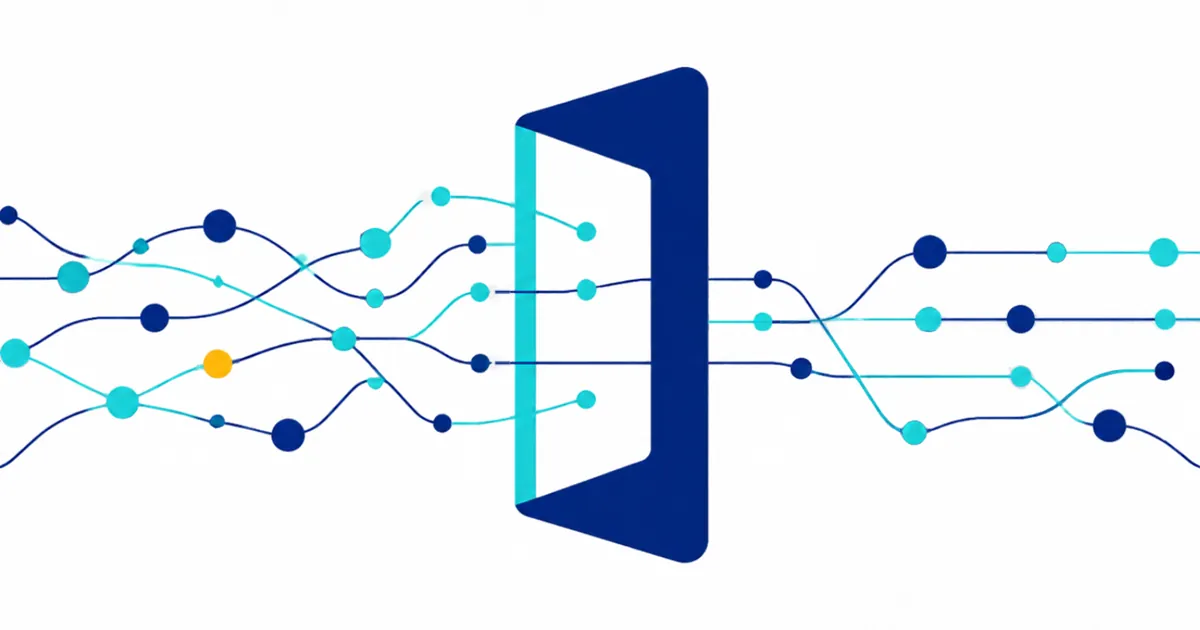
Short answer: the return on investment of a business AI system is measured after human validation, not at the first generated answer. Build a representative evaluation set, measure the critical-error rate, review time and total cost per accepted result, then compare against the existing process. That comparison, renewed over time, is what authorises production.
Definition: cost per accepted result. The total cost of a deliverable validated by a human — model calls, review, correction, retries — divided by the number of deliverables actually used.
What vendor announcements do not prove
In late October 2026, Anthropic published two science announcements: "early progress" on accelerating drug development with six organisations (announcement, 27 October 2026), then an expansion of its AI for Science programme to some twenty foundations and research institutions (announcement, 28 October 2026).
These announcements are interesting for a reason other than their promises: they remind us that in proof-driven professions, a result only exists after validation. No public protocol and no peer-reviewed publication in these communications. The pharmaceutical industry will not change its validation chain on a vendor press release. In Europe, evaluating general-purpose AI models is an official competence of the European AI Office (page updated 29 October 2026).
The transfer to your company is direct: an impressive demo is not a return on investment. What counts is what still holds true after your experts have reviewed it.
The advertised gain is not the real gain
A business AI system sits in a three-step chain:
- Generation. The model produces a draft deliverable. This is the spectacular part, and the cheapest.
- Verification. An expert checks, corrects, retries. This is where the real cost lives.
- Decision. The deliverable is accepted, amended or rejected. Only accepted deliverables count in ROI.
Most pilots measure step 1 and ignore steps 2 and 3. That is why so many impressive POCs collapse when the real return is computed.
Building the measurement
The full method for testing an agent — common, ambiguous, adversarial and failure cases — is covered in our article on evaluating an AI agent before launch. For ROI measurement, five rules are enough:
- Start from real cases. 100 to 300 representative files, including the difficult ones your teams meet once a month.
- Define the pass mark. Not text similarity: a business criterion an expert can verify.
- Separate critical from minor errors. A formatting error is fixed in ten seconds; an inverted legal clause invalidates the deliverable.
- Include review time. Measure it on a sample, in minutes, per deliverable type. When to require validation follows a risk matrix, not intuition.
- Renew the set. Models change every few months; so does your data.
A worked example: from advertised to real gain
Illustrative example. A document pre-validation assistant processes a file in 3 minutes, against 20 minutes manually. The advertised gain is 85%.
Expert review takes 12 minutes per file. The gain drops to 25%. And if one file in ten requires a full redo (20 extra minutes), the real gain falls to around 15%.
A 15% gain on a high-volume process is still an excellent deal. But it is not the same business case as 85% — and it does not justify the same upstream investment.
Indicators to track in production
| Indicator | What it measures | Classic pitfall |
|---|---|---|
| First-pass acceptance rate | Deliverable reliability | Measuring it on easy cases |
| Review time | Cost of validation | Leaving it out of the total |
| Cost per accepted result | Economic performance | Confusing it with cost per call |
| Regression rate after updates | Model drift | Not replaying the evaluation set |
Limits to assume
A business AI system fails quietly on cases outside its training distribution, and does not know it is failing. Three practical consequences:
- do not automate what nobody can verify;
- keep a graceful degradation path to the manual process;
- log rejections and retries, not only successes — that is the raw material of your governance.
From evaluation to decision
Evaluation is not a technical step: it is the contract between the AI team and the business. The AI opportunities audit starts with this framing — measure the existing process, define the pass mark, set production thresholds before the pilot. If your AI budget is committed without these thresholds, the real cost will remind you. To frame an evaluation on a concrete case, let's talk.
Frequently asked questions
- How do I build a business evaluation set?
- Start from 100 to 300 representative real cases, including the hard ones. Define for each a business success criterion an expert can verify. Renew the set every quarter: models and your data drift, and a frozen evaluation goes blind.
- What role should human experts keep?
- A validation and decision role, not data entry. Measure their review time as a cost in its own right. If review consumes most of the time saved, the use case is not ready: narrow the scope or improve reliability before industrialising.
- How do I measure the cost of errors?
- Distinguish minor errors, fixed in seconds, from critical errors that invalidate the deliverable or create legal risk. Report correction and human recovery costs against the number of deliverables. That total feeds the cost per accepted result.
- When does an evaluation authorise production?
- When the critical-error rate is stable across two successive evaluation runs, the cost per accepted result beats the existing process, and a named owner can stop the service. Set these thresholds before the pilot, not after.
Read next

· 5 min read
AI contracts: mastering consumption commitments
Usage-based AI APIs can hide a fixed financial commitment. The clauses to examine and the scenarios to simulate before signing a generative AI contract.
Read article →
· 4 min read
Total cost of an AI solution: beyond tokens
Comparing AI solutions on token price leads to bad decisions. The seven cost components of TCO and how to price your exit before signing.
Read article →
· 6 min read
Claude Code or Codex: build yourself or delegate?
Build with Claude Code or Codex, or commission an Elia Studio MVP? Compare time, skills, responsibilities and complete cost.
Read article →